A damaged pipeline can affect far more than the area around a leak. Production schedules, equipment access, and maintenance budgets may all be impacted. Our approach to industrial CIPP starts with understanding those operational concerns alongside the condition of the pipe.
The following scenarios illustrate how cured-in-place rehabilitation can address different facility challenges. Each highlights the problem, the potential repair approach, and the evidence needed to evaluate success.
Applying Industrial CIPP Beneath a Production Floor
Consider a manufacturing facility with a deteriorating drain beneath an active production area. Excavating the entire line could require removing flooring, relocating equipment, and restricting access.
Our assessment would begin with inspection and cleaning to establish whether the pipe can accept a liner. If suitable, rehabilitation through available access points could reduce demolition while addressing qualifying cracks or leaking joints.
For this application, success means more than completing installation. The repaired line must meet project requirements, connections must remain functional, and the facility needs a coordinated return to service. Access preparation and temporary drainage arrangements also belong in the schedule.
Restoring Vertical Drainage in an Occupied Building
A vertical drain running through multiple floors presents a different access problem. Conventional replacement may require opening walls or ceilings across several occupied spaces.
Cured-in-place lining can be an option for qualifying vertical piping. Our planning would account for the pipe’s configuration, branch connections, access limitations, and the building’s operating schedule. The company’s published guidance identifies vertical piping as an application that can reduce the need to open building finishes.
A successful project would restore the intended drainage function while limiting disruption to occupants. Connection reinstatement and final inspection are important parts of that outcome. Lining would not eliminate every access opening or correct every configuration problem.
Rehabilitating a Large-Diameter Facility Drain
For a large facility drain, recurring leaks or deterioration may justify evaluating rehabilitation before another emergency repair.
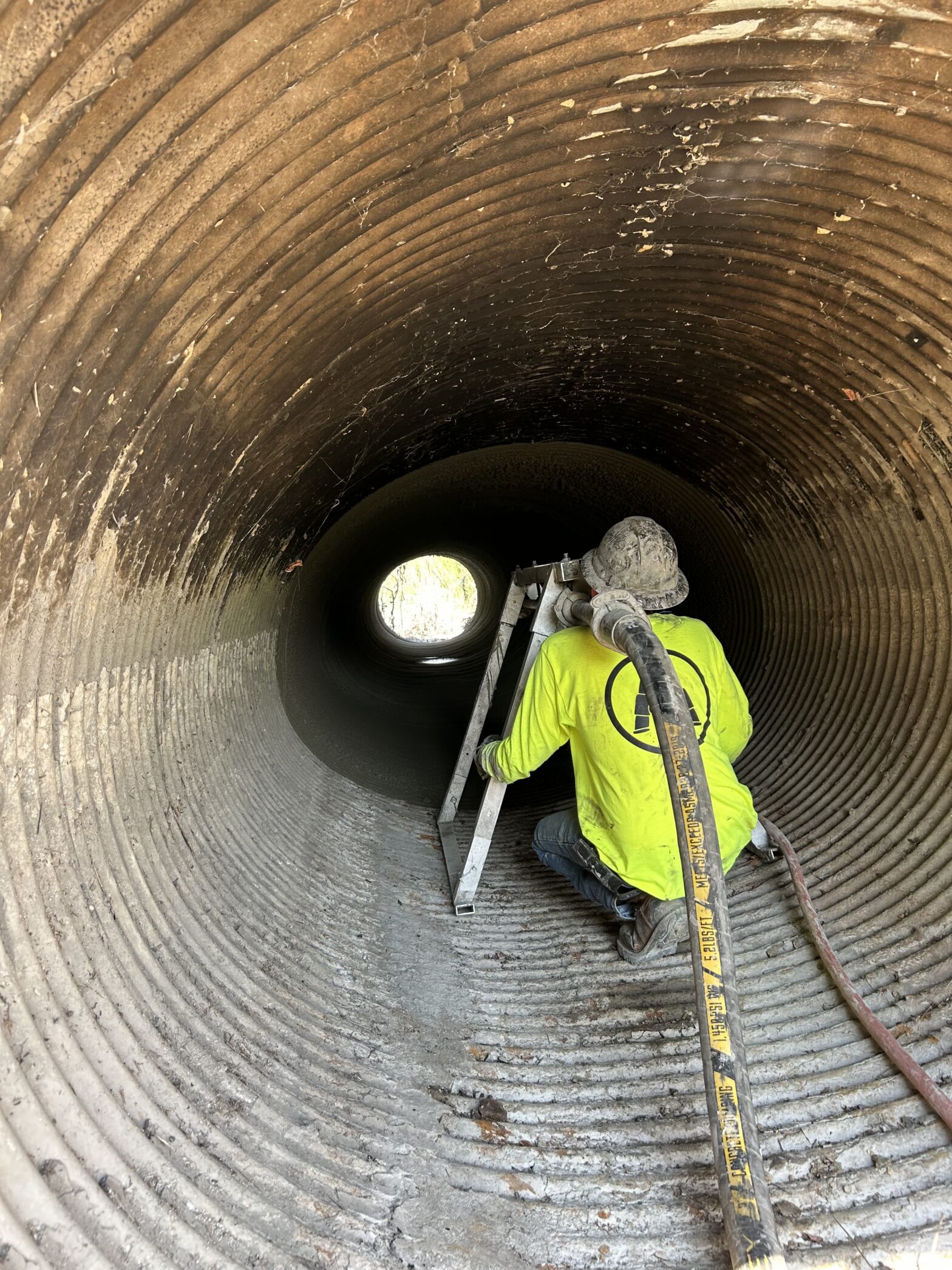
Our inspection services help establish internal conditions and identify areas needing attention. Large-diameter systems may require specialized camera or robotic equipment to obtain useful footage.
The resulting plan must account for dimensions, structural requirements, flow management, and access. A liner would need to suit those conditions rather than simply match the nominal pipe size.
Success would be measured against the approved design and acceptance requirements. A coordinated bypass plan, where necessary, would also help maintain facility operations during the work.
What These Applications Have in Common
Each scenario begins with a business problem, but the repair decision depends on documented pipe conditions. Our team connects those two priorities when evaluating a project.
Key planning considerations include:
- Existing defects and pipe geometry
- Operating conditions and liner compatibility
- Access and temporary service arrangements
- Connection locations and reinstatement needs
- Installation verification and acceptance criteria
These details turn a promising repair method into a project that facility managers can assess realistically.
Discuss Your Facility’s Repair Options
Successful industrial CIPP applications depend on selecting suitable pipelines and planning around facility requirements. At Industrial CIPP, we help evaluate aging systems and explain available rehabilitation options. Contact our team to discuss your piping concerns and begin developing a practical repair strategy.